
Now on Google Play
Help your child think better.
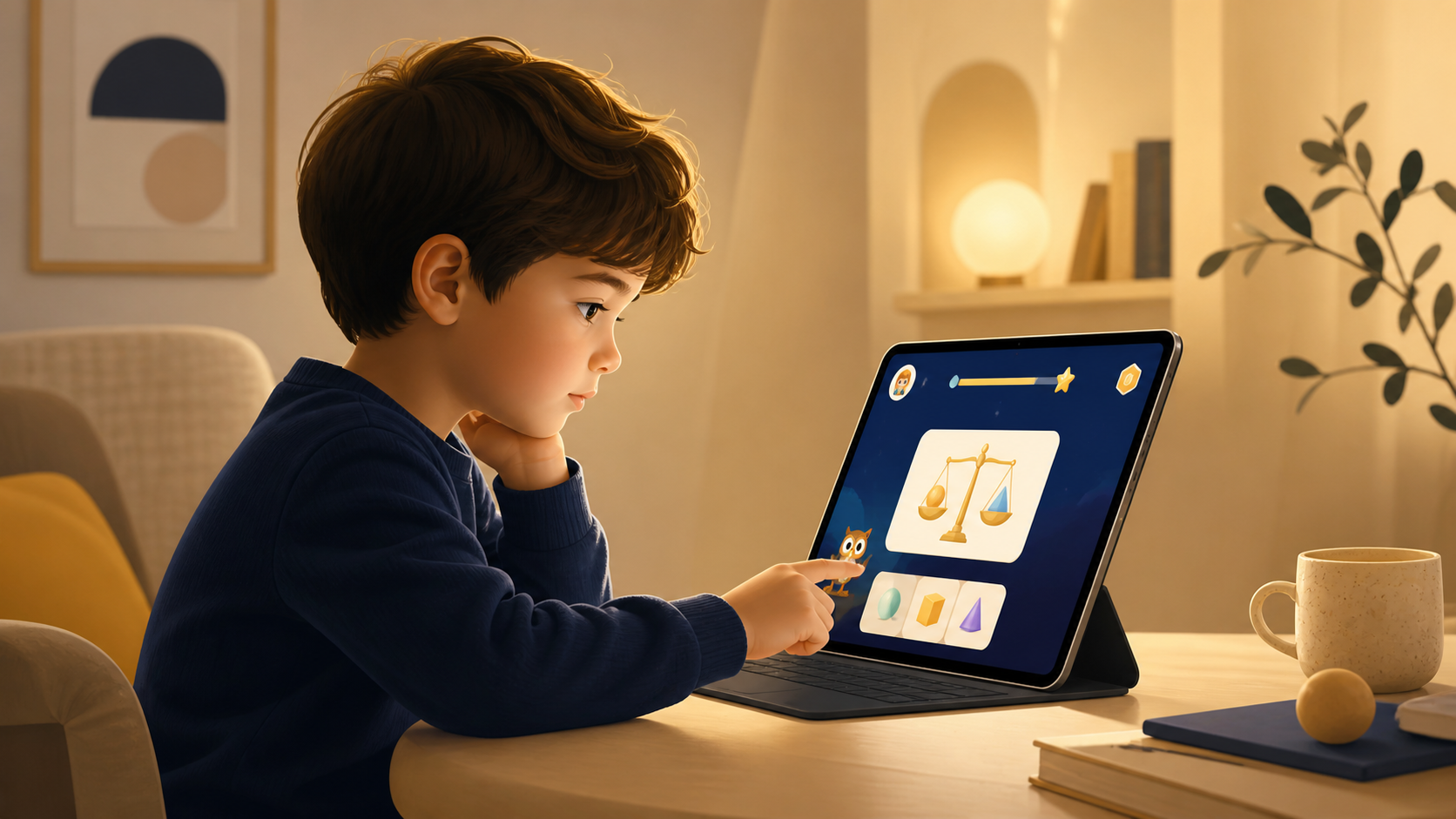
CAPS Quest turns screen time into guided mission play where kids see visual choices, think through clues, and make the final call themselves.
Picture-first missions
Talk, think, choose
Short guided adventures
See gameplay
Watch how CAPS turns one mission into real thinking.
See the child flow from mission briefing to answer choices, assistant conversation, and a finished learning moment.
01
Children make the call
CAPS does not lecture at the child. It asks them to choose, compare, and commit to an answer.
02
Mistakes become progress
Wrong answers turn into clues, discussion, and another try, which keeps learning active instead of passive.
03
Screen time has shape
Each mission has a beginning, a few bounded steps, and a finish, so the experience feels intentional.
Why this matters
Not doomscrolling. Decision-making play.
A lot of children's screen time trains fast tapping and passive watching. CAPS is designed to do the opposite: slow the child down, invite a choice, and make the learning moment depend on reasoning.
Active attention
The child stays with one question long enough to think.
Useful mistakes
Wrong answers become a clue trail instead of a dead end.
Bounded missions
A clear start, a few steps, and a real finish.
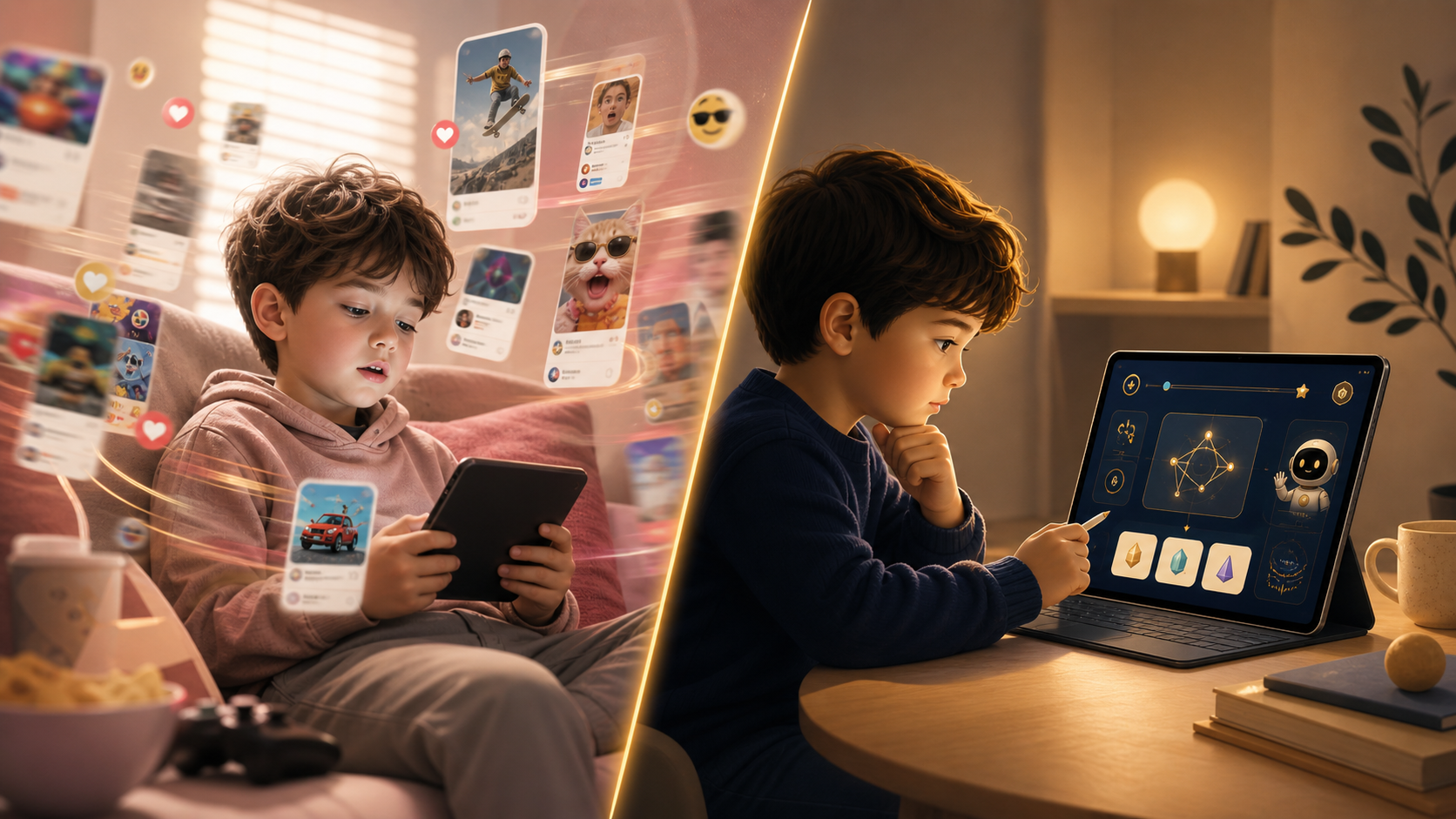
Old pattern
Doomscroll-style feeds
- Fast stimulation and fast forgetting.
- The answer arrives immediately, so the child reasons very little.
- Attention gets pulled outward by novelty.
CAPS pattern
CAPS mission play
- Children pause, compare choices, and make the call.
- The assistant can discuss clues, but the child still decides.
- Learning happens through reasoning, not just receiving information.
What research suggests
Passive screen habits can work against attention and thinking.
We should not overclaim. But the research direction is clear enough to take seriously: when children spend more time in passive, high-speed screen experiences, attention and executive function can suffer.
AAP study
Even short exposure can matter
One Pediatrics study found that just 9 minutes of a fast-paced cartoon reduced executive function performance in 4-year-olds right after viewing.
Read the studySystematic review
High exposure is linked to attention difficulty
A 2023 review found that high screen exposure in preschoolers was consistently associated with attention difficulties, with several studies showing earlier exposure predicted later problems.
Read the reviewNICHD summary
More than 2 hours a day can raise concern
NICHD notes that children with more than 2 hours of daily screen time were more likely to show deficits in problem solving, impulse control, IQ, and attention span.
Read the NICHD summarySources: American Academy of Pediatrics, Pediatric Neurology, and NICHD. The evidence is nuanced, but strong enough to argue for more active, thoughtful screen experiences.
Mission worlds
Learning adventures built around real thinking
CAPS missions turn early science ideas into playful decisions. Each world gives the child a clear problem, a few meaningful options, and an assistant that helps them reason through clues without taking over.
1
See the mission setup.
2
Compare the answer cards.
3
Talk through clues if needed.
4
Choose and move forward.
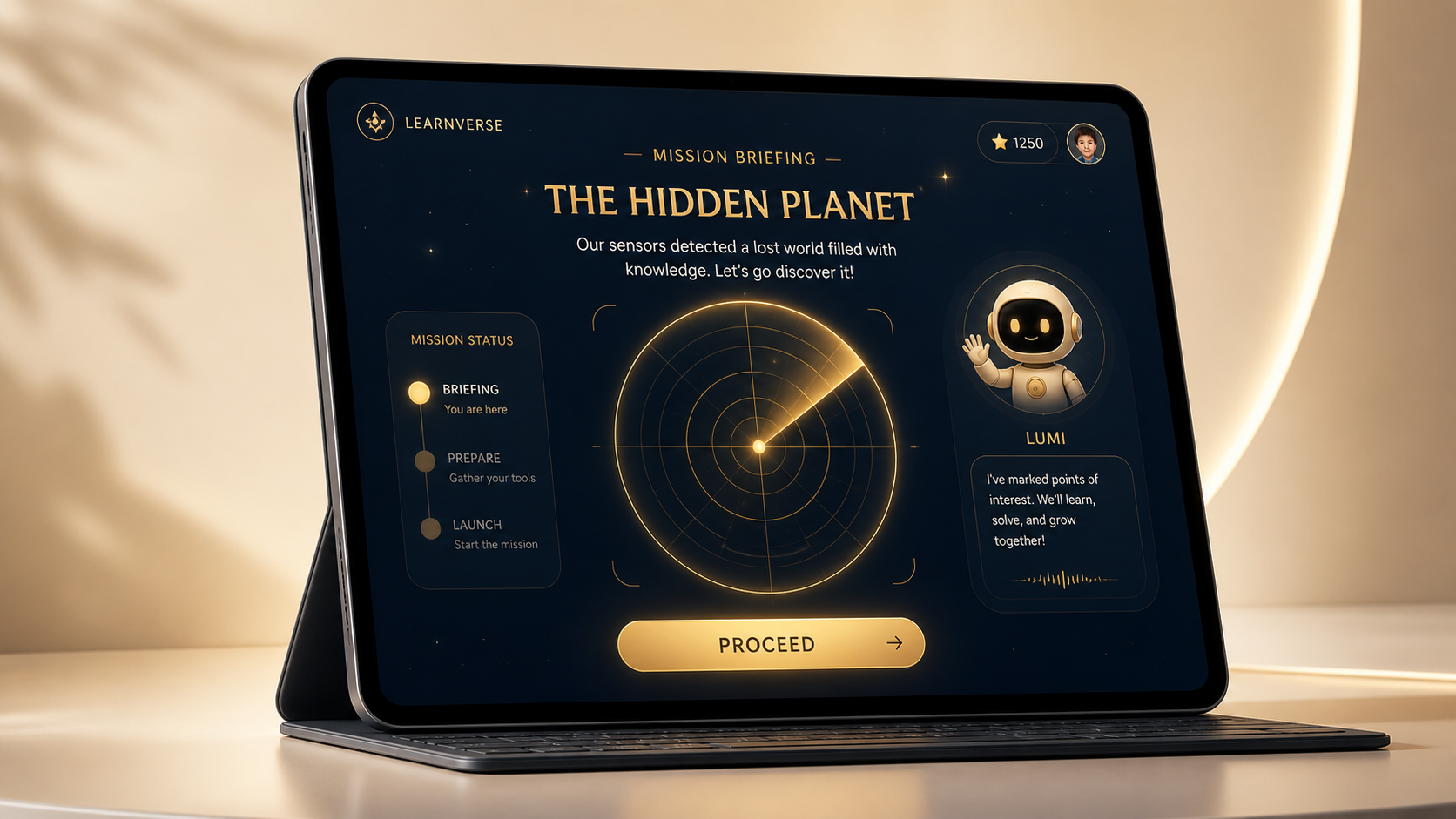
Mission Briefing
A short brief sets the stakes, then the child enters the challenge and starts making decisions.

Photosynthesis Rescue
Restore a glowing forest by figuring out what plants need and why each clue matters.

Weather Station Alert
Read clouds, wind, and forecast clues, then make the safest mission decision.
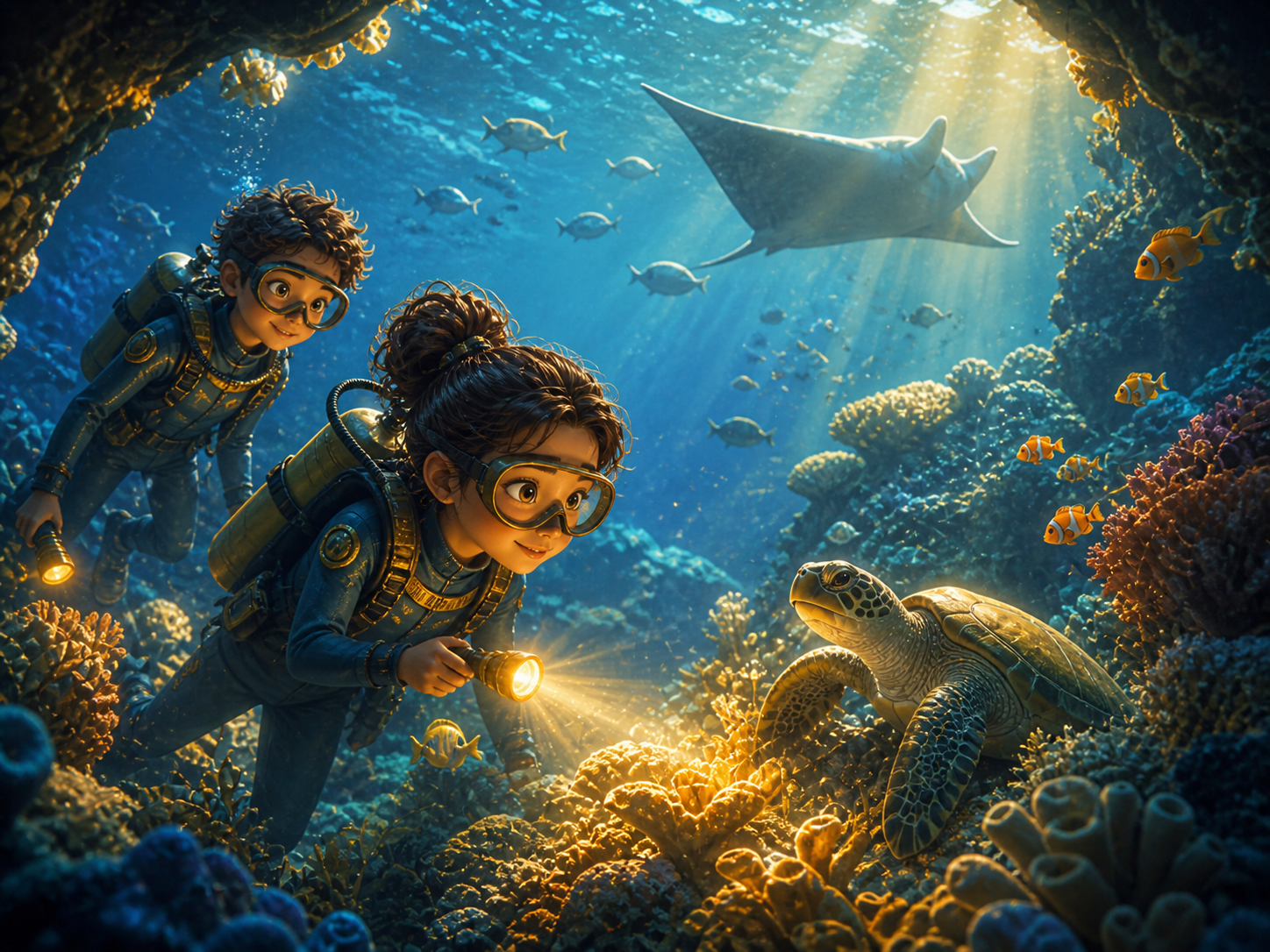
Ocean Habitat Mission
Match sea animals to habitats and learn why the right home helps each creature survive.

Share feedback
Using CAPS and want to share feedback?
Reach out if you have feedback after trying CAPS, ideas for new missions, or things you want us to improve.
What we believe
Children deserve screen time that invites thought, not just more scrolling.